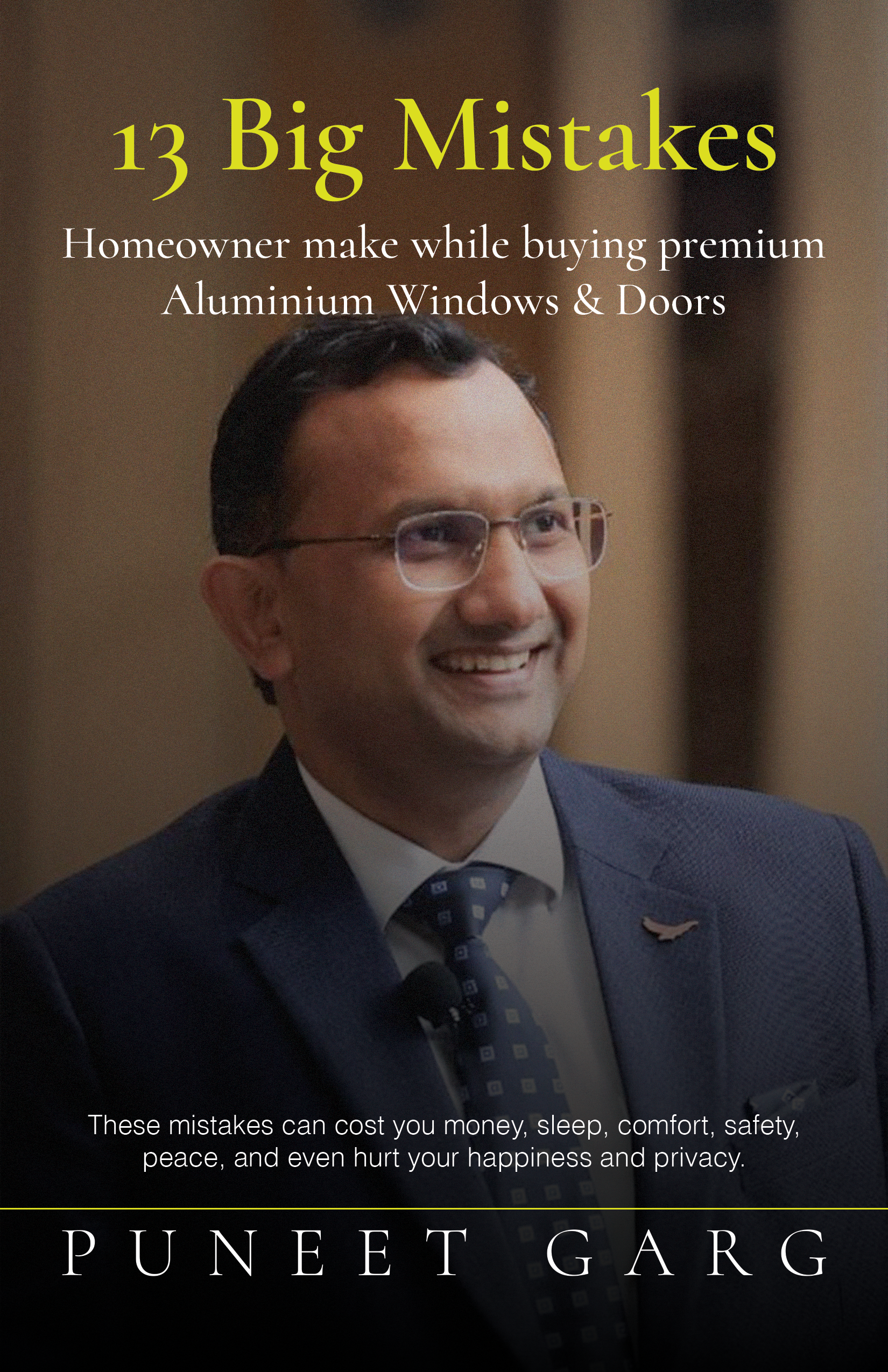
A premium window can look exceptional on Day 1 and still become an expensive problem years later. This is particularly important when choosing aluminium windows in Ludhiana for villas, premium residences and commercial projects. Large glass openings, slim aluminium frames and sophisticated hardware can create an impressive architectural appearance, but none of these elements alone tells you how the window will perform over time.
The more useful question is not simply, "Which window looks better?" It is, "How will this complete window system perform?" Long-term performance depends on how the complete combination of aluminium profiles, glazing, hardware, sealing, drainage and installation manages heat, solar gain, air, water and structural loads.
For architects, homeowners and developers evaluating aluminium window systems in Ludhiana, six performance parameters provide a much stronger basis for making this decision.
1. U-Value: How Much Heat Passes Through the Window?
U-value measures thermal transmittance. In simple terms, it indicates how readily heat can pass through a building element. A lower U-value represents lower heat transfer, which is why this number becomes important when evaluating the thermal performance of a window.
For example, a complete window with a U-value around 1.8 W/m2K represents a substantially different thermal specification from a window above 3.0 W/m2K. However, the number should always be understood in context. Glass performance alone does not describe the thermal performance of the complete window.
The aluminium frame, glazing and overall system configuration all contribute to the final result. Therefore, when comparing aluminium windows in Ludhiana, homeowners and architects should establish whether a quoted U-value applies only to the glass or to the complete window system. Published Schuco technical information similarly reports thermal values in relation to specific window dimensions and glazing configurations rather than treating U-value as an isolated number.
2. SHGC: U-Value Alone Doesn't Tell the Complete Thermal Story
The second important parameter is the Solar Heat Gain Coefficient (SHGC), which relates to solar heat entering through glazing. A window can have a favourable U-value and still allow unwanted solar heat into a building if the glazing, orientation and shading strategy have not been considered together.
This becomes particularly relevant for modern villas in Ludhiana with large glass openings and floor-to-ceiling windows. The objective should therefore not simply be to choose glass with a low U-value. A more complete approach considers low heat transfer together with appropriate solar control.
The Bureau of Energy Efficiency's residential building-envelope guidance similarly considers glazing as part of a wider building strategy involving shading, insulation and envelope airtightness. Therefore, while comparing energy-efficient aluminium windows in Ludhiana, it is useful to understand both U-value and SHGC rather than judging thermal performance using one number alone.
3. Air Leakage: A Closed Window Should Actually Feel Closed
A premium aluminium window may have slim sightlines, quality hardware and sophisticated glass, but poor sealing can still compromise the separation between the indoor and outdoor environment. This is why air permeability should be considered a measurable performance characteristic rather than simply accepting terms such as "airtight."
When evaluating aluminium windows and doors in Ludhiana, project teams should understand whether the proposed system has been tested for air permeability, what classification or test result applies and whether that result relates to the actual system being specified.
Formal window and facade testing recognises air permeability as a specific performance characteristic. Schuco's testing facilities, for example, assess air permeability alongside watertightness and resistance to wind load. This allows architects and homeowners to move from a general marketing promise to a measurable system specification.
4. Water Tightness: Ludhiana's Monsoon Requires More Than Silicone
Water tightness is another important consideration when selecting aluminium windows in Ludhiana. A common assumption is that preventing leakage simply requires applying more silicone around the window. In reality, successful water management involves much more than sealant.
A properly designed aluminium window or facade system needs drainage, pressure management, suitable gaskets and clear drainage or weep paths working together. The basic principle is straightforward: water needs a controlled way out of the system.
If drainage paths are blocked or incorrectly executed during installation, the intended performance of the window may not translate into the finished building. Schuco's testing information describes weathertightness testing of windows and complete facade units, including watertightness, air permeability and resistance to wind load.
For homeowners, architects and developers working on projects in Ludhiana, drainage and water-management details should therefore be reviewed before installation rather than investigated only after a leakage problem appears.
5. Wind Load and Deflection: Larger Glass Needs More Engineering
Large-format glazing has become an important part of contemporary residential and commercial architecture. Bigger openings can create stronger connections between indoor and outdoor spaces, but increasing the size of the glass also increases the importance of engineering.
A window or facade should not be considered successful simply because it remains standing. It needs to perform within its intended wind pressure and deflection requirements while maintaining the integrity of its glass, seals, frame and associated components.
This becomes particularly relevant for large openings, oversized glass panels, exposed elevations and taller structures. When selecting aluminium window systems in Ludhiana, the appropriate system should therefore be determined according to actual opening dimensions and project conditions rather than selecting a profile purely because it looks slim or visually attractive
In simple terms, bigger glass should mean more engineering, not more assumptions.
6. Installation Quality: Where Tested Performance Can Be Won or Lost
Even a well-engineered and tested aluminium window still has to be installed correctly. This is one of the most important considerations when evaluating window installation in Ludhiana, because laboratory performance establishes what a properly configured system can achieve, while site execution determines whether that performance can be reproduced in the completed project.
Frame-to-wall junctions, anchors, gaskets, sealant joints, drainage and installation tolerances all contribute to the final result. Installation should therefore not be treated merely as the last activity after purchasing the windows. It forms part of the overall performance system.
This also explains why two windows that appear similar in quotations may behave very differently after installation. The profile and glass may look comparable on paper, but engineering, fabrication and execution can change the actual outcome.
Why Small Window Decisions Compound Across an Entire Project
One small execution issue on one window may appear manageable. But a villa, apartment building or commercial project rarely has only one opening. When the same problem is repeated across multiple windows, doors and floors, its impact compounds.
The reverse is equally important. Good practice repeated consistently across every opening can create greater predictability in the completed building. In simple terms, good practice x every opening x every floor x every year creates cumulative impact.
This is why homeowners and architects looking for premium aluminium windows in Ludhiana should evaluate more than aluminium profiles, glass thickness and hardware. The complete building-envelope approach matters.
BEE design guidance describes how a package combining passive measures, improved insulation, external shading, double glazing and better envelope airtightness can potentially achieve a 50-60% reduction in cooling thermal energy demand compared with the guideline's reference conditions. Importantly, this figure applies to the combined package of building-envelope measures and should not be interpreted as a saving delivered by windows alone.
How Should You Compare Aluminium Windows in Ludhiana?
Instead of beginning the conversation with "What is the price per square foot?", a more useful starting point is "What performance does my project actually require?"
A structured approach is to Specify -> Engineer -> Test -> Install -> Audit. First, define the expected performance of the openings. Then understand whether the proposed window system has relevant test information and whether the quoted performance values relate to the glass, frame or complete system. The selected system should then be matched to the project's actual opening dimensions and conditions, followed by controlled installation and verification of critical execution details.
This approach makes comparing aluminium windows and doors in Ludhiana much more meaningful than comparing quotations solely on price, profile depth, hardware brand or appearance.
What This Means for a Premium Home in Ludhiana
Windows are generally selected once but expected to perform for many years. That changes the economics of the decision. A lower initial quotation can become expensive if recurring adjustments, sealing, repairs or replacement arerequired later. At the same time, simply paying more does not automatically guarantee better performance.
The more rational approach is to make the specification measurable. For Lumani, this means beginning with what each opening is expected to achieve and then determining the appropriate aluminium window or door system rather than beginning with the product alone.
For homeowners building premium residences in Ludhiana, this provides a clearer basis for comparing proposals: not simply "Which window costs less?", but "Which complete system is engineered for what my project actually needs?"
Conclusion
Choosing aluminium windows in Ludhiana should involve much more than deciding between profiles, glass options, colours and quotations. U-value, SHGC, air permeability, water tightness, wind-load performance and installation quality provide a stronger framework for understanding how a complete window system is expected to behave.
The principle is simple: don't specify only what the window is made from. Specify what the complete system needs to do.
For villas, premium residences and commercial projects in Ludhiana, measurable performance creates a more informed way to compare, engineer and execute aluminium window and door systems.
FAQs
1. What should I check before buying aluminium windows in Ludhiana?
Look beyond appearance and price. Important considerations include U-value, SHGC, air permeability, water tightness, wind-load requirements and installation quality. The appropriate specification will depend on the project and opening.
2. Are aluminium windows suitable for luxury homes in Ludhiana?
Aluminium window systems can support large openings and contemporary architectural designs, but suitability should be determined by the complete system specification, glazing, performance requirements and installation - not material alone.
3. What does U-value mean when choosing aluminium windows?
U-value describes thermal transmittance. Lower values indicate lower heat transfer. When comparing windows, establish whether the quoted value applies only to the glass or to the complete window system.
4. How can water leakage be reduced in aluminium windows?
Water management should consider system drainage, gaskets, pressure management, weep paths, sealant joints and installation quality rather than relying only on additional silicone.
5. How should I compare aluminium window suppliers in Ludhiana?
Compare the complete proposal rather than only price per square foot. Review system specifications, relevant performance information, glass, engineering for the opening, installation methodology and how site execution will be checked.
Our Clientele




















11

Years of
Experience
5046
Projects
Completed
Before You Finalize Your Windows & Doors — Read This First
These mistakes don’t just cost money.
They cost comfort, sleep, privacy and peace of mind.